
What is Wavelength game, and why has it become one of the most talked-about modern party games? At its core, understanding what the wavelength game is helps explain why it stands apart from traditional guessing and trivia games. It is a social experience built around interpretation, intuition, and shared thinking. Instead of correct or incorrect answers, players explore how ideas fall between two extremes. This guide explains what the wavelength game is, how it works, why it matters for social play, and what beginners can expect, giving you a clear and confident understanding before playing for the first time.
Understanding the Core Idea of the Wavelength Game
What Is Wavelength Game at Its Core
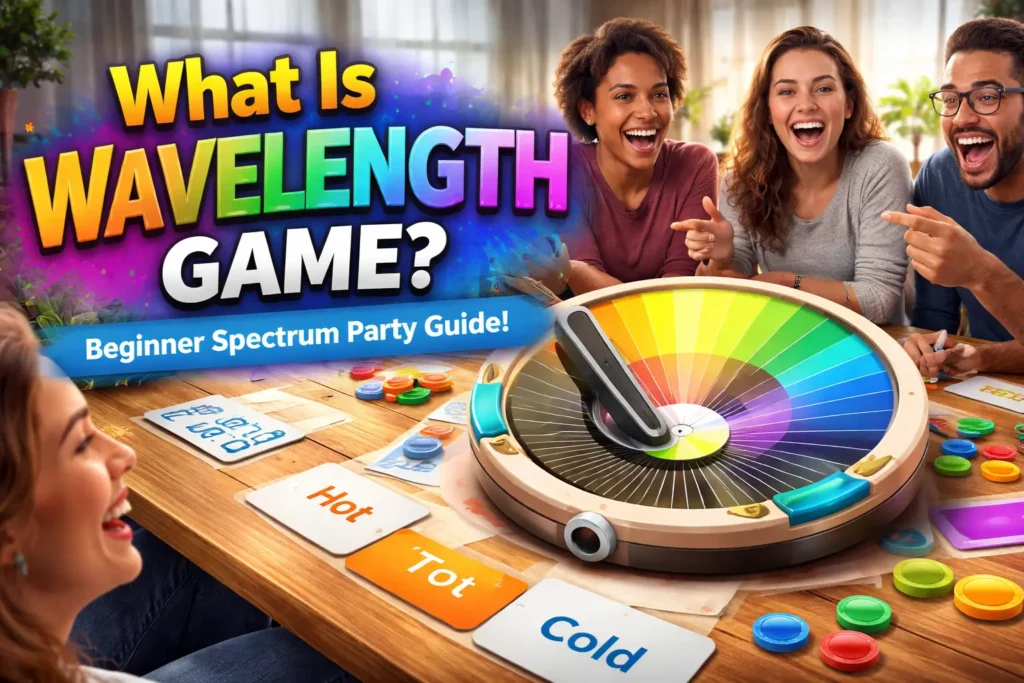
To clearly understand what the wavelength game is, you need to focus on its central mechanic: spectrum-based thinking. The game challenges players to guess a hidden position on a scale between two opposing concepts. One player knows the exact position and provides a single clue to guide their team.
Unlike fact-based games, what the wavelength game is truly about is shared perspective. There is no single correct answer. Success depends on how well players understand each other’s reasoning, assumptions, and mental frameworks.
Why What Is Wavelength Game Feels Different from Other Party Games
Many people asking what is wavelength game is are surprised by how discussion-driven it is. Traditional party games focus on speed, memory, or vocabulary. Wavelength focuses on empathy and alignment. Players are rewarded for thinking about how others interpret ideas rather than what is objectively correct.
How the Wavelength Party Game Works
The Spectrum and the Hidden Target
A major part of understanding what the wavelength game is lies in the physical or digital spectrum. Each round includes a scale with two opposite ideas on each end. A hidden target is placed somewhere along that spectrum.
Only the clue giver can see this position. Their task is to communicate where the target lies without revealing it directly. This subtle balance is central to what the wavelength game is and why it feels intellectually engaging.
Role of the Clue Giver
The clue giver represents the bridge between the hidden information and the team. When people ask what the wavelength game is really testing, the answer is this role. The clue must be simple, relatable, and carefully chosen.
Strong clues help teammates narrow down the spectrum naturally. Overly complex clues often weaken performance and reduce alignment.
Team Discussion and Guessing
Team discussion defines what the wavelength game is in practice. Players debate meanings, justify interpretations, and negotiate a final guess. This collaborative discussion is not optional; it is the heart of the experience.
Once the guess is set, the hidden target is revealed, showing how close the team’s shared understanding truly was.
Why Wavelength Is a Spectrum Guessing Game
The Importance of Gradients, Not Absolutes
When evaluating what wavelength game is, it becomes clear that the game avoids absolute thinking. Every idea exists on a continuum. Players are not choosing sides but positions.
This mirrors real-world decision-making, where opinions and judgments are rarely black or white.
Subjectivity as a Strength
Another key reason people enjoy learning what wavelength game is is its embrace of subjectivity. Different groups interpret the same clue differently, and that variation is intentional.
The game values insight into people, not agreement on facts.
Who Should Play the Wavelength Game
Beginners and Casual Players
For those wondering what the wavelength game is like for beginners, the answer is reassuring. The rules are easy to grasp, and no prior experience is required. Most players understand the game after one example round.
Professionals and Team Environments
Professionals often explore the wavelength game because it naturally develops communication skills. It encourages listening, perspective-taking, and respectful disagreement, making it suitable for workshops and team sessions.
Mixed Groups and Social Gatherings
Because the wavelength game does not rely on niche knowledge, it works well across age groups, cultures, and experience levels.
What Makes Wavelength Game So Engaging
Conversation-First Gameplay
At its core, what the wavelength game offers is conversation as the main reward. Every round sparks discussion, even when guesses miss the mark.
Balance of Logic and Intuition
Understanding what the wavelength game is also means recognizing how it blends analytical thinking with gut instinct. Players reason through clues while also relying on emotional and contextual understanding.
High Replay Value
Another reason people continue asking what the Wavelength game is worth buying is its replayability. With countless spectrum combinations and interpretations, the experience rarely feels repetitive.
Wavelength Game Rules Overview for Beginners
Basic Setup
To summarize what the wavelength game is in rules form, players divide into teams and take turns selecting a clue giver. The opposing team listens but does not interfere.
Scoring System
Points are awarded based on proximity to the target. While scoring exists, most players agree that what is wavelength game prioritizes discussion over competition.
Winning Conditions
The game ends when a team reaches the chosen score limit, though many groups continue playing for enjoyment rather than victory.
Common Mistakes New Players Make
Overcomplicating Clues
A frequent misunderstanding about the wavelength game is assuming complex clues are better. In practice, simple clues align teams more effectively.
Forgetting the Team Perspective
Players new to what is wavelength game sometimes choose clues based on personal logic rather than shared understanding.
Excessive Analysis
While discussion is essential, overanalyzing can pull teams away from intuitive guesses that are often closer to the target.
Tips to Improve Your Wavelength Gameplay
Think in Relative Terms
A core strategy in mastering the wavelength game is focusing on position rather than category.
Learn How Your Team Thinks
The more rounds you play, the clearer what the wavelength game becomes as a social exercise. Observing patterns improves future performance.
Keep Discussion Anchored
Effective teams discussing what the wavelength game is stay grounded in the spectrum instead of drifting into unrelated debates.
How Wavelength Compares to Other Party Games
| Knowledge Dependency | Low | Medium to High |
| Subjectivity | Central | Limited |
| Team Discussion | Essential | Optional |
| Replay Value | Very High | Moderate |
This comparison helps clarify what the wavelength game offers that many other games do not.
Playing the Wavelength Game Online or Digitally
Online Play Options
For those researching what the wavelength game is in digital form, online versions maintain the same core mechanics and are ideal for remote play.
Digital vs Physical Experience
Digital play is faster, while physical play often creates richer discussion. Both preserve what the wavelength game fundamentally represents.
Frequently Asked Questions About What Is Wavelength Game
What is the wavelength game in simple terms?
The wavelength game can be explained as a team guessing game where players locate a hidden position between two opposite ideas.
Is the wavelength game suitable for beginners?
Yes, beginners usually understand what the wavelength game is after one round.
How many players are ideal
What is the wavelength game works best with four or more players divided into teams.
Is luck involved
While chance exists, skill and team understanding dominate what wavelength game outcomes.
Can it be used for team building
Yes, many organizations use the what wavelength game for communication training.
Is it competitive or casual?
The wavelength game can be played competitively, but it shines as a social experience.
Does it require strong language skills?
No. The wavelength game relies more on shared meaning than vocabulary depth.
How long does a session last
A typical what is wavelength game session lasts thirty to forty-five minutes.
Is the replay value high?
Yes, the wavelength game offers strong replay value due to variable interpretations.
Can discussions get heated?
Debate happens, but what the wavelength game encourages is respectful conversation.
Conclusion
Understanding what the wavelength game is reveals why it has earned a strong reputation among modern party games. It replaces rigid answers with thoughtful discussion and turns interpretation into entertainment. Whether played casually or professionally, the wavelength game succeeds because it brings people closer through shared reasoning. The real value is not just guessing correctly, but learning how others think and why that matters.