
If you enjoy games that challenge the way you think, communicate, and understand other people, Wavelength is worth your attention. This article explains how the game works, why it is fun to play online, and how it can help improve real-life skills such as teamwork, listening, and quick thinking. Whether you are a beginner or already familiar with party games, this guide will help you get more value from every round.
What Is Wavelength?
Wavelength is a social guessing game built around ideas, clues, and interpretation. Instead of focusing on speed alone, it asks players to understand how others think. That is what makes it feel fresh, clever, and different from many basic browser games.
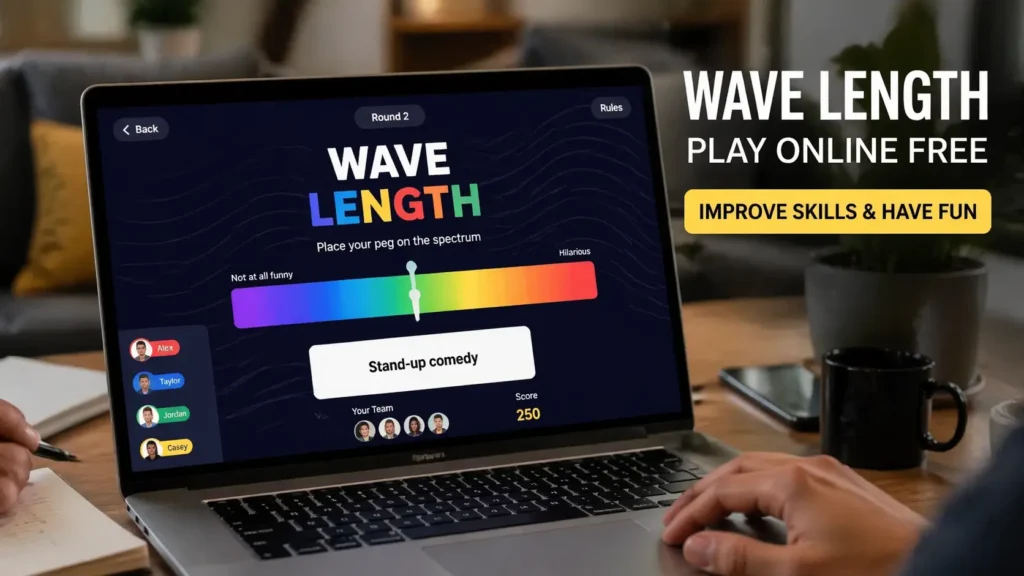
In a typical round, one player gives a clue related to two opposite ideas on a spectrum. Other players then try to place a marker where they believe the hidden target should be. The fun comes from discussion, opinion, and the challenge of matching another person’s mindset.
Because the rules are simple, Wavelength is easy for beginners to learn. At the same time, it offers enough depth to stay exciting for experienced players. Some rounds feel obvious, while others lead to laughter, debate, and surprising results.
Table of Contents
Why People Love Playing Wavelength Online
There are many online games available today, but this one stands out for combining entertainment with human connection. It is not just about winning points. It is about reading clues, sharing ideas, and discovering how differently people think.
Players love the online version for several reasons:
- It is easy to start without a long setup
- Friends can join from different locations
- Each round feels different because opinions change
- It encourages smart discussion instead of random clicking
- It works well for parties, casual game nights, and team activities
Another reason people return to Wavelength is replay value. Even if the same spectrum appears again, the clue and the group reaction can make the round feel completely new. That variety keeps the game lively and memorable.
Key Skills You Can Improve Through Wavelength
One of the best things about this game is that it offers more than simple fun. Wavelength helps players sharpen a range of useful mental and social skills in a natural way.
Reading Between the Lines in Wavelength
A strong player not only listens to the clue itself. They also notice tone, confidence, and context. This improves the ability to read meaning beyond the obvious words.
For example, if a clue giver sounds uncertain, that may suggest the target is somewhere near the middle rather than at the end. Over time, players become better at noticing subtle hints and hidden intentions.
Team Communication Through Wavelength
Good teams usually do not win by talking more. They win by talking clearly. In this game, players learn how to express opinions in a simple way, respond to different viewpoints, and stay focused during discussion.
That is useful beyond gaming. Clear communication matters in school, work, group projects, and everyday conversations. This is one reason why Wavelength works well as a casual team-building activity.
Quick Thinking and Decision Making
Each round pushes players to think fast without becoming careless. You must hear the clue, picture the spectrum, compare ideas, and make a judgment. That process strengthens decision-making under light pressure.
Perspective Taking
A clue that makes perfect sense to one player may confuse another. The game teaches you to step outside your own thinking and consider how someone else may view the same concept. That ability is valuable in friendships, family conversations, and professional settings.
How to Play Wavelength Online
Learning the basics is easy. The challenge comes later when you try to become more accurate and more consistent.
Basic Flow of a Round in Wavelength
Most online rounds follow a simple pattern:
- A hidden target is placed somewhere on a spectrum
- One player sees the target position
- That player gives a clue connected to the spectrum
- Other players discuss the clue and place their guess
- The target is revealed, and points are awarded based on accuracy
The process feels smooth once you have played a few rounds. New players often understand the system within minutes, which makes it a great option for mixed groups.
Simple Example Table
| Step | What Happens | Why It Matters |
|---|---|---|
| Target set | A hidden point appears on a scale | Creates the challenge |
| Clue given | One player explains the target indirectly | Starts discussion |
| Team guess | Players choose a position on the scale | Tests shared understanding |
| Reveal | The real target is shown | Shows how close the team was |
| Score | Points are given based on accuracy | Keeps rounds competitive |
This structure is simple, but the experience stays interesting because the clue quality and group chemistry always change.
Best Ways to Get Better at Wavelength
Improvement does not depend on luck alone. With the right habits, you can become far more accurate and helpful during team rounds.
Here are some practical ways to improve:
- Listen to the clue before jumping to a conclusion
- Think about both extremes of the spectrum
- Consider the clue-giver’s personality and style
- Avoid arguing for too long over tiny details
- Use examples when explaining your guess
- Learn from missed rounds instead of ignoring them
Many players improve quickly when they stop treating each round as a random guess. The strongest teams usually develop a shared style of thinking. They notice patterns in how certain friends give clues, describe categories, and judge extremes.
Solo Practice Ideas for Wavelength
Even though the game is social, you can still improve on your own. A good method is to make your own sample spectra and think of possible clues for different target positions.
Try this simple practice routine:
- Pick two opposite ideas, such as easy and hard
- Imagine five different positions between them
- Create one clue for each position
- Ask yourself whether another person would understand your intention
This habit trains flexibility, creativity, and precision. It also makes you a better clue-giver during real matches.
Common Mistakes New Players Make in Wavelength
Beginners often enjoy the game right away, but they can lose accuracy because of a few repeated mistakes. Knowing these early can help you improve faster.
Taking the Clue Too Literally
A clue is usually not a direct answer. It is a bridge between the target and the spectrum. If you treat it as a fixed fact, your guess may become too narrow.
Ignoring the Middle Area
Many new players assume the target must sit close to one extreme. In reality, many strong clues are designed for the center or near the center. Smart teams stay open to balanced positions.
Talking Without Structure
Group discussion is important, but a messy discussion can damage your results. It helps to compare one or two clear positions rather than throwing out too many random opinions.
Forgetting the Human Side
The best guesses come from understanding the clue giver, not just the clue. That is why Wavelength often rewards players who know their teammates well.
Tips for Better Online Sessions With Wavelength
Online play can be just as fun as in-person when the session is managed well. A few simple habits can improve the experience for everyone.
Keep the Group Focused
Side jokes are fun, but too much interruption can break the flow. Short, focused discussions usually create better rounds and keep the energy strong.
Use Clear Audio
Because clues matter so much, audio quality can affect results. Ask players to speak clearly and avoid background noise when possible.
Mix Skill Levels
A group with both beginners and experienced players often feels more entertaining. New players bring fresh thinking, while experienced players help keep the discussion sharp.
Rotate Roles
Let different people give clues often. This keeps the session balanced and helps everyone build confidence. It also makes the game feel fairer and more dynamic.
When handled well, Wavelength becomes one of the most enjoyable online group games because it combines structure with freedom. Every player gets a chance to contribute, and every clue can create a new kind of conversation.
Who Should Play Wavelength?
This game works for a wide range of players because it is easy to learn and flexible in tone. Some groups play it casually for laughs, while others enjoy the strategic side.
It is especially suitable for:
- Friends looking for a fun online party game
- Families who want something light but thoughtful
- Students who enjoy word-based and idea-based games
- Remote teams that want a relaxed group activity
- Content creators or streamers who enjoy interactive discussion
The great strength of Wavelength is accessibility. You do not need advanced gaming skills, fast reflexes, or complex setup knowledge. You only need curiosity, attention, and a willingness to share ideas.
What Makes This Game Different From Other Online Party Games
Many party games depend on drawing, speed, or hidden roles. Those formats can be fun, but they often favor one kind of player. This game feels broader because it rewards creativity, empathy, reasoning, and communication at the same time.
Here is a quick comparison:
| Feature | Typical Party Game | Wavelength Style Experience |
|---|---|---|
| Main skill | Speed or trivia | Interpretation and teamwork |
| Learning curve | Sometimes uneven | Easy for beginners |
| Replay value | Can repeat quickly | Feels fresh with each group |
| Discussion level | Often limited | Central to the gameplay |
| Social insight | Low to moderate | High and memorable |
That combination makes Wavelength appealing for players who want both fun and substance in the same session.
How Wavelength Helps Beyond the Game
Some games entertain you for a while and then end there. This one often leaves something useful behind. Regular play can help people become more thoughtful speakers, better listeners, and more patient collaborators.
You may notice improvements in these areas:
- Explaining ideas more clearly
- Listening before responding
- Understanding different viewpoints
- Making faster but smarter judgments
- Working better in small groups
Because the learning feels natural, players improve without feeling like they are doing formal practice. That is part of the appeal. Wavelength teaches through play rather than pressure.
Practise These Skills Together in Real Time
Online rooms turn skill practice into a shared habit. Friends, classmates, or colleagues join from their own devices, write clues under optional time pressure, and compare their reasoning when every guess appears on the reveal. Room chat and reactions encourage discussion, and One Guesser mode is especially useful for practising clear, precise explanations. Start a practice room.
Wavelength FAQ
Is Wavelength easy for beginners to learn?
Yes, the basic rules are simple, and most players understand the flow after a few rounds. The real depth comes from clue quality and group discussion, which improve naturally with practice.
Can Wavelength really help improve communication skills?
It can help practically because players must explain ideas clearly, listen carefully, and respond to different opinions. Those habits often carry into daily conversations and teamwork.
Is Wavelength better with friends or mixed groups?
It works well in both settings. Friends may understand each other more easily, while mixed groups often create surprising and funny discussions that make rounds more interesting.
Can I enjoy Wavelength without being highly competitive?
Absolutely. Many people enjoy it mainly for the conversation, humor, and shared thinking. The scoring adds structure, but the social experience is often the real highlight.
What is the best way to improve at Wavelength quickly?
Focus on understanding the clue giver, not only the clue itself. Think about the full spectrum, stay open to middle positions, and review missed guesses to see where your reasoning changed.
Can teams practise these skills in an online room?
Yes. Online rooms let a group practise together from different places. One Guesser mode is ideal for clear explanations, while optional timers help players practise fast, confident decisions.